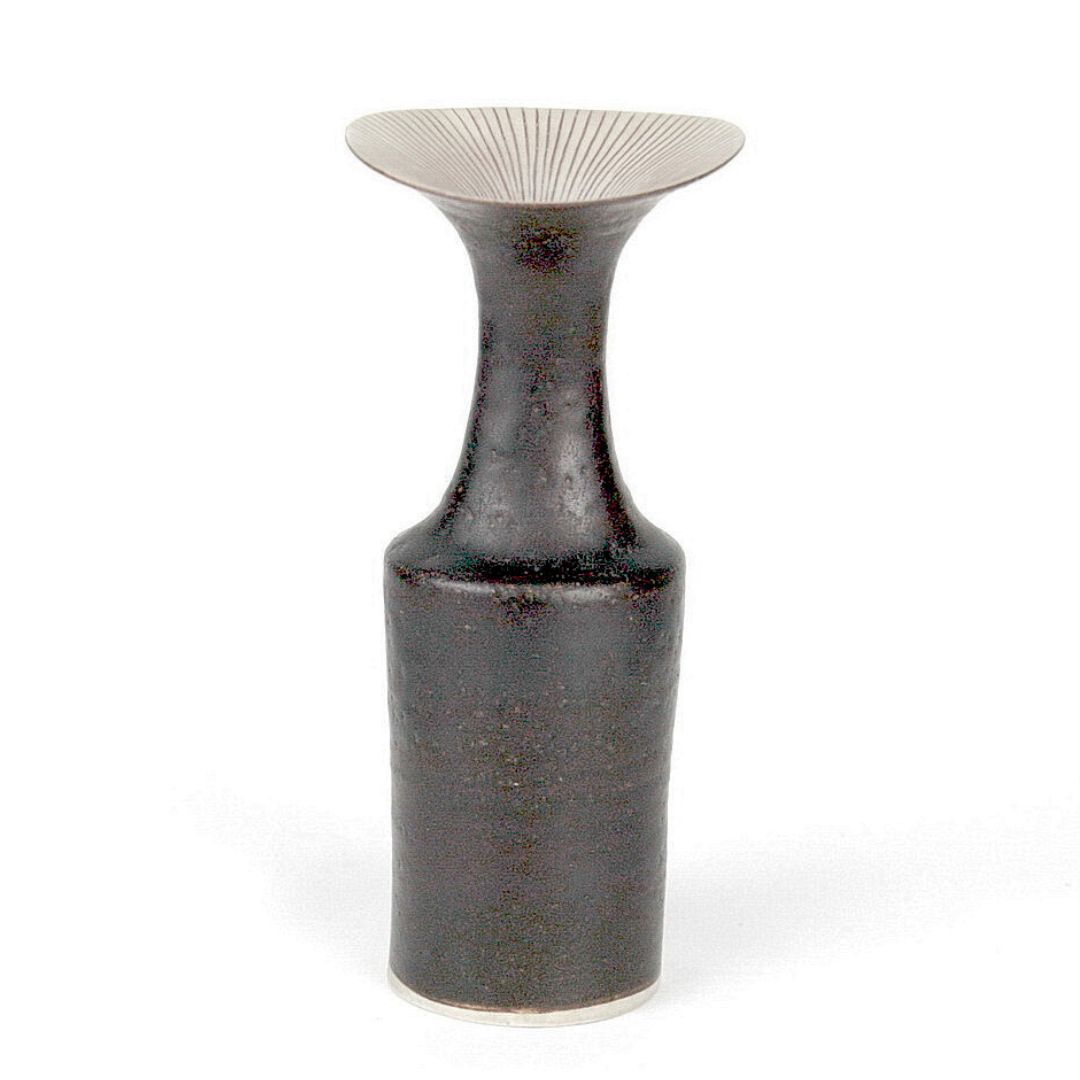
-
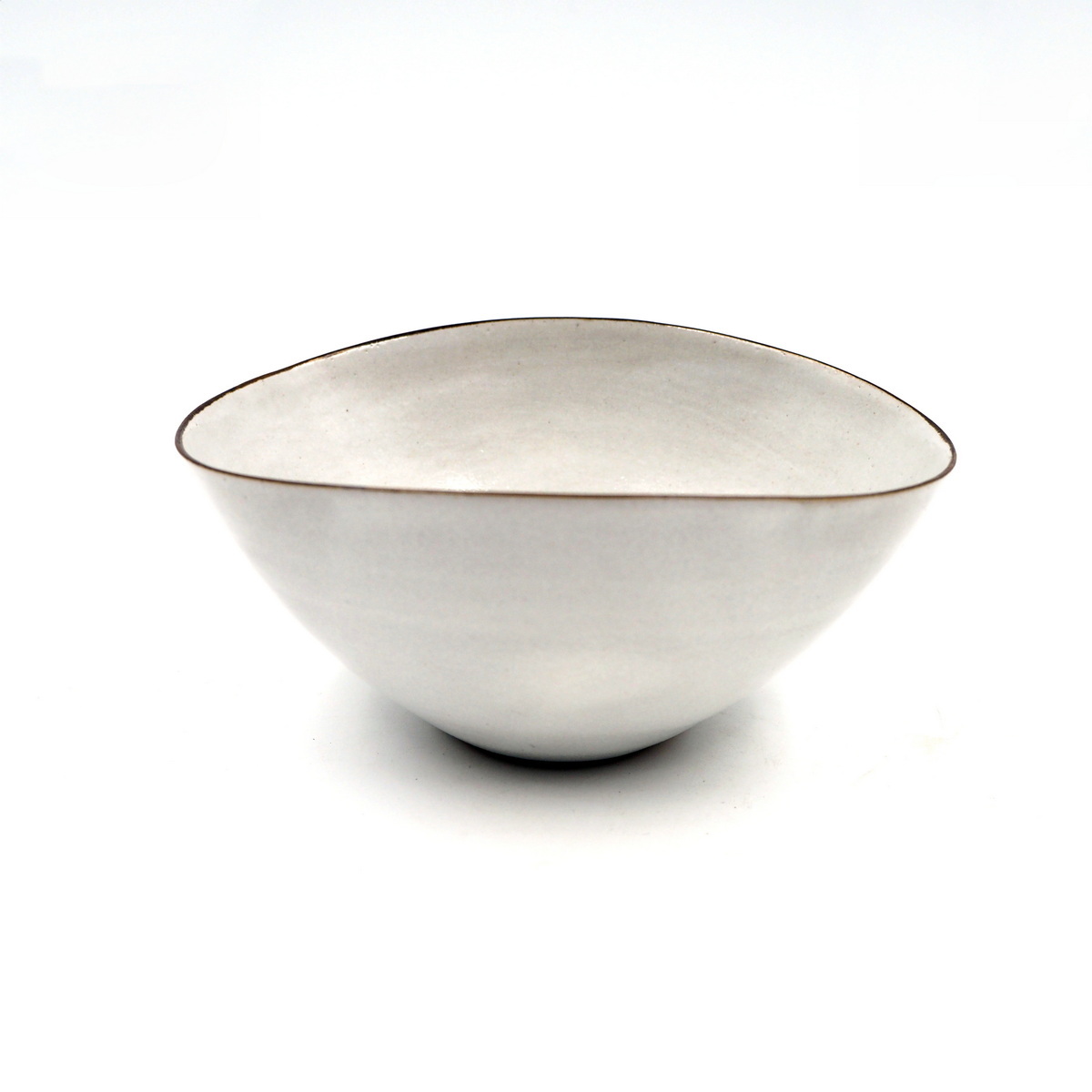
Small Bowl
£3,500.00
About the maker
Lucie Rie (1902–1995) was born Lucie Gomperz in Vienna and studied at the Vienna Kunstgewerbeschule between the ages of 20 and 26. Her work achieved early success, and by the age of thirty her ceramics had been exhibited in France, Italy, and Austria. In 1938, she moved to England to escape the Nazis, and in 1939 met Bernard Leach. While Leach offered well-meaning criticism, Rie maintained her own direction, continuing to develop a distinctive voice that was independent of his influence.
During the war years, her sense of purpose waned, but it was fully restored in 1946 when the young Hans Coper joined her London studio. Originally intended to cast decorative buttons for her to glaze, Coper’s emerging talent reinvigorated Rie’s creativity and confidence. The two worked together until 1958, exhibiting widely and benefiting from promotion by the ceramics expert and critic Cyril Frankel, yet Rie’s own style remained singular and uncompromising.
In 1948, Rie shifted from earthenware to working in stoneware and porcelain, creating a distinctive modern style characterised by refined forms, elegant glazes, and technical mastery. Her work combined a clarity of form with subtle surface textures and colours, reflecting both a deep respect for tradition and a determination to innovate on her own terms. Her contributions to ceramics were widely recognised: she was appointed OBE in 1968, CBE in 1981, and Dame in 1991. Lucie Rie was widely written about and the subject of a BBC film, and since her death in 1995 her work has continued to attract international acclaim, frequently featuring in prestigious exhibitions and collections worldwide