Skip to content

Leach Pottery Early Standard Ware

Featuring the Standard Ware made at the Leach Pottery between the 1950s and 1970s.


ABOUT LEACH POTTERY EARLY STANDARD WARE

Standard Ware: An Icon of 20th Century English Pottery

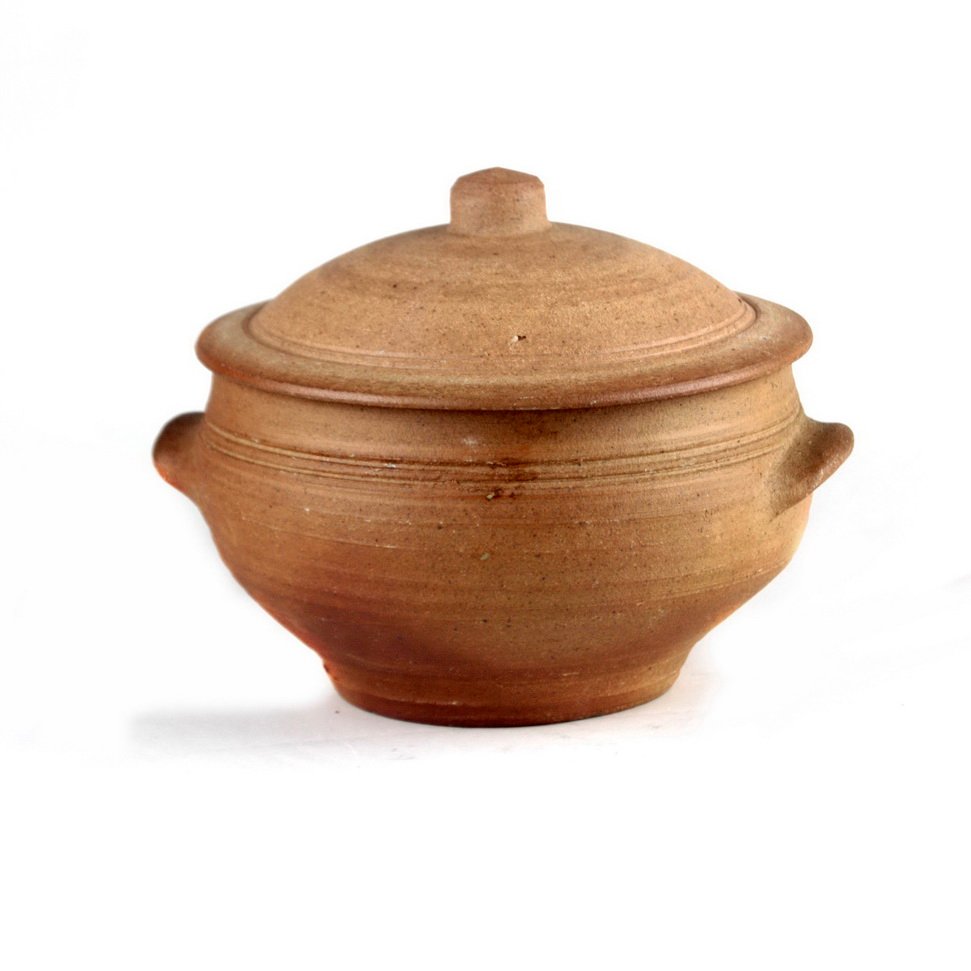
The general domestic product of the Leach Pottery was known as ‘Standard Ware’, and it grew into an icon of what was thought to represent 20th Century English studio pottery.

Materials and Early Development

In the early days, Standard Ware was made in earthenware, rooted in the traditions of early English slipware. By the mid-1930s, it began to be made in stoneware, to suit more modern domestic needs and allow greater design possibilities.

Its real transition came after the war in 1946, when David Leach, Bernard’s eldest son, formed a partnership with his father. Together, they began to standardise the designs. Bernard would draw each pot on a card, which the team would later make. David recalls:

“My father would make the first pot; I would make the first interpretation.”

Bernard was the guiding hand and inspiration, while David organised the practical side. Later, a catalogue with over 100 items was printed and sold through large department stores, influencing the tastes of the British public.

Teaching and Training Future Potters

Beyond financial stability and public engagement, Standard Ware had another important role: training future potters. Bernard believed that teaching others was crucial for the survival and influence of the craft pottery movement.

Initially, apprentices and helpers were recruited casually. As production increased, Bernard formalised the process. Local apprentices like William Marshall and Kenneth Quick were trained from scratch, while others joined a two-year student/apprentice programme. Prospective apprentices had two weeks to test their suitability; those who proved their worth joined the production team.

Training began with learning the shapes of Standard Ware under experienced members of staff, such as David Leach or William Marshall. Though the shapes appeared simple, they were technically demanding, testing both skill and concentration. Each pot allowed subtle interpretations without losing the original design integrity, enabling individual makers to develop a recognisable style.

The Legacy of Standard Ware

When Bernard died in 1979, the student/apprentice programme ended, and production of Standard Ware gradually wound down. These pots now stand as a historical record of an era, demonstrating how form and style can evolve over 40 years while retaining the integrity of Bernard’s original designs.

John Bedding – Leach Potter 1968–1978

ABOUT LEACH POTTERY EARLY STANDARD WARE

The general domestic product of the Leach Pottery was known as ‘Standard Ware’, as such it grew into an icon of what was thought to represent 20th Century English studio pottery.

In the early days it was made in earthenware, which was rooted in the traditions of early English slipware. By the mid 1930’s it was starting to be made in stoneware, this was to suit the more modern domestic needs, and to give more scope for design. Its real transition came after the war when in 1946 David (Bernard’s eldest son) formed a partnership with his father and together they started to standardise the designs. Bernard drew each pot on a card to be made later by the team; David quotes, “my father would make the first pot I would make the first interpretation”. This was to be the relationship they built into the partnership, Bernard the guiding hand and inspiration, David the practical organiser. Later a catalogue was printed with over 100 items to sell. The Leach Pottery was now a true production pottery, selling to large department stores, and influencing the tastes of the British public.

Apart from giving the Pottery financial stability, and offering the public an alternative to industrial domestic ware, the Standard Ware had another important use; as an aid to the teaching and training of future potters. Part of Bernard’s philosophy had evolved to understand, that the instruction of others in the art of pottery was important to the survival and influence of the craft pottery movement. In the past he had acquired helpers and apprentices on a casual basis, but as the Pottery became more productive he saw the need to be more organised in his recruitment. A few like William Marshall and Kenneth Quick, were local boys he trained from scratch as apprentices, but for others he set up a two-year student/apprentice programme for experienced and semi-experienced potters. They were given two weeks to test their suitability, if they proved their worth they became members of the production team. They first had to learn the shapes of the Standard Ware under the instruction of an experienced member of staff; earlier David Leach or later as in my case William Marshall. The shapes looked simple, but as I found out, were very demanding. They have subtle lines, easily malformed, which tested both your eye and your skills. The level of concentration needed honed an understanding of form in general and gave you the tools to work on any shape or scale. Within the form of each pot there was scope for subtle interpretations without it losing its original integrity; as such each maker had their own individual style, which to the practiced eye can be recognised. I can usually pick out my own pots, and those of others that I worked with.

When Bernard died in 1979 the student/apprentice programme was ended and production of the Standard Ware was wound down. These pots stand as an historic record of an era, and as an example of how form and style can evolve over 40 years but still retain the original integrity and faith of Bernard’s first drawings on the design ware cards.

John Bedding – Leach Pottery 1968-1978